Roman Catholic Church
The Pale HorseThe Roman Catholic Church enters the story through a deathbed request that sends Father Gorman to a woman in Benthall Street, and through the possibility that her final words concerned sins disclosed in confession. Rather than depicting the Church’s wider organization, the narrative gives it a specific pastoral role: the dying woman rejects the local vicar and asks for a Roman Catholic priest, a choice Inspector Lejeune later connects with the mysterious “wickedness” she mentions.
The Deathbed Request
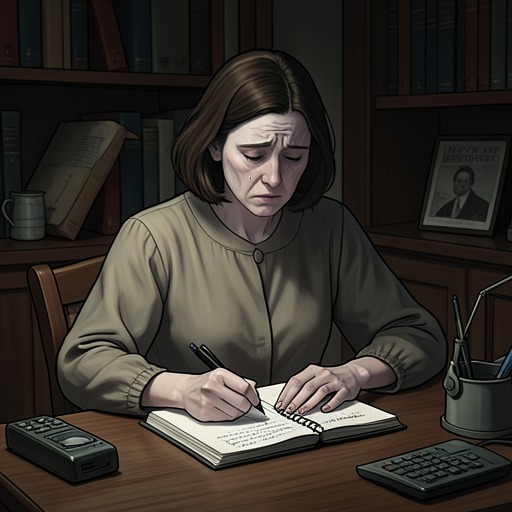
Mrs Davis’s illness worsens after she returns to work too soon. Feverish and struggling to climb the stairs, she refuses the doctor’s help but insists that she needs a priest before it is too late. The request is specific: it must be a Roman Catholic priest, not the vicar. Her neighbour, who had not known her to be Catholic and had seen no crucifix in the house, sends for Father Gorman at St Dominic’s.
The absence of a visible crucifix does not mean there was none. One is tucked at the bottom of Mrs Davis’s suitcase, a detail Inspector Lejeune notices but does not disclose to the witness. The concealed object quietly corroborates the religious identity that the deathbed request had made surprising to those around her.
Confession and the Investigation
Father Gorman arrives carrying a small leather case and goes with the messenger to Benthall Street. The narrative associates his visit with the traditional expectation, as the witness understands it, that a Catholic nearing death would confess her sins. After the priest enters, Mrs Davis’s neighbour hears her speak of wickedness and perhaps of a horse; she cannot recall the words precisely or identify what the horse meant.
Inspector Lejeune accepts confession as the likely context for the reference to wickedness, but the word acquires a darker significance because Father Gorman is later followed and beaten to death. The Church’s presence thus links an apparently private religious encounter to the murder inquiry: the priest may have heard something consequential, while the woman’s confused recollection offers only an uncertain fragment of what was said.
Religious Ritual and the Pale Horse
The Church is not shown directing or participating in the ceremony at the Pale Horse. The narrative nevertheless places that scene alongside the Catholic deathbed confession as a contrasting use of ritual. At the house in Benthall Street, the priest is summoned in response to an individual’s imminent death; at the Pale Horse, Thyrza Grey presents ritual as a deliberate means of affecting the human spirit and invokes the force of forms repeated over time.
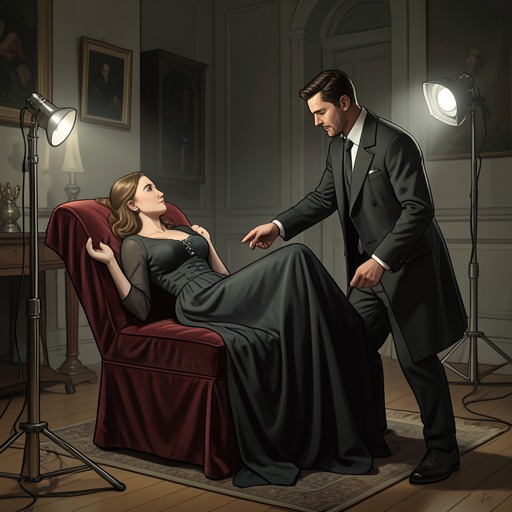
The contrast is made tangible in the converted barn. Against a cold, indirect light, a purple-covered divan, chalked signs, a brazier, a copper basin, a living white cock, and a complicated electrical apparatus compose an elaborate ceremony. Thyrza’s practical precautions and equipment sit beside Bella’s chanting and the ritual’s occult display. The episode does not establish any connection between these proceedings and the Roman Catholic Church; instead, it distinguishes the Church’s role in the story—priestly care and the possibility of confession—from a staged ritual whose supernatural claims remain part of the investigation’s problem.